 PT
 EN
 ES
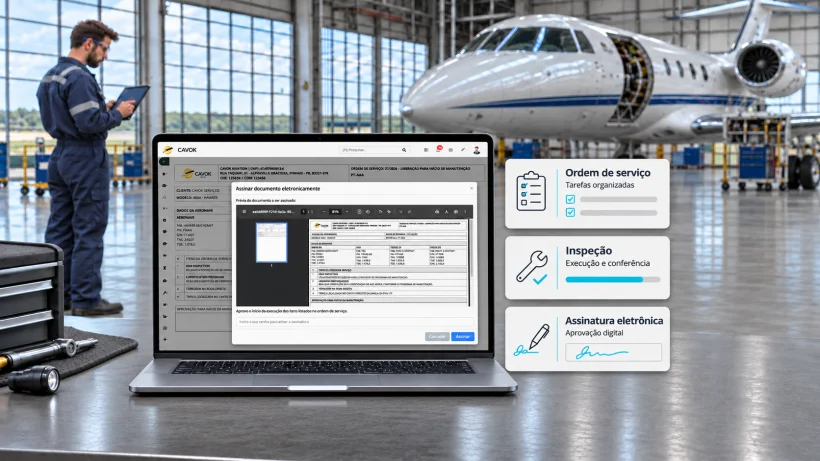
Digital transformation in aircraft maintenance has brought gains in efficiency, safety, and regulatory compliance. In this context, digital maintenance, combined with the use of the CAVOK System, represents an evolution in aircraft technical management, enabling maintenance processes to be controlled electronically.
A team of mechanics, inspectors, engineers, and Maintenance Technical Control (MTC) professionals needs structured processes, traceable information, and reliable tools. Even so, many organizations still rely on spreadsheets, messages, and documents distributed across different platforms.
What are the main challenges in keeping your maintenance shop organized?
When information is decentralized, it becomes harder to track the entire maintenance cycle. Activities that should be integrated—from issuing a Work Order to closing it and billing for the work—may depend on manual searches, information exchanges between departments, and constant cross-checks.
- Scattered information: data is spread across departments, files, and platforms.
- Excessive paperwork: maintenance requirements can lead to the printing and circulation of large numbers of documents.
- Rework: teams have to find and enter the same information in different records.
- Communication failures: a lack of integration between departments can delay processes and make activities harder to track.
These challenges affect productivity and process quality. Preparing a Work Order that could bring together tasks, materials, technical references, and applicable requirements can take hours when each department has only part of the necessary information.
With centralized, real-time data, teams can work together, track activities, and strengthen control over maintenance processes.
Why can managing aircraft outside a reliable system cause problems?
Using spreadsheets as the primary tracking tool can create risks for aircraft maintenance management. Some spreadsheets lack adequate access controls, audit trails, or protection for formulas and critical data. As a result, information may be changed accidentally or without authorization, affecting the reliability of records and decisions.
- Risk of inconsistencies: different files may contain conflicting or duplicate information.
- Data loss: documents scattered across folders, emails, and messages can be difficult to locate and preserve.
- Limited traceability: without a centralized database, it is harder to track changes and review history.
- Time spent searching: teams such as MTC and Sales may search for the same data in different sources.
This fragmentation creates rework and wastes resources, reduces operational efficiency, and can increase response times for customers. An integrated platform brings information together in one environment, with controlled access, real-time updates, and traceable activities.
How can you centralize maintenance information?
The CAVOK ERP integrates aircraft maintenance information in a single platform. The workflow can begin when a flight is entered in the app. After review and electronic signature, the aircraft component tracking records are updated automatically.
With the data up to date, the company can issue Work Orders more quickly. For the selected period, the system consolidates items due, including components, inspections, and applicable directives, so they can be included in the Work Order.
- Data updates: the flight is entered, reviewed, and electronically signed.
- Work Order planning: components, inspections, and directives coming due are consolidated.
- Task assignment: each professional receives activities relevant to their role through customized profiles.
- Execution and signature: after completing a task, the mechanic records an electronic signature.
- Inspection and approval: the activity moves to the next stage of the process.
- Time tracking: work time is associated with the maintenance activity to track man-hours (MH), productivity, and costs.
Mechanics can use an integrated timer to record the time spent on each activity. The system also allows unproductive hours to be categorized, providing information for analyzing operational efficiency.
How does CAVOK help reduce rework and improve efficiency?
By reducing the need for parallel records in spreadsheets and external documents, CAVOK ERP helps integrate information and streamline maintenance shop processes.
- Faster commercial proposals: processes that could take days can be completed in minutes, helping teams respond to customers sooner.
- Online approval: digital proposals are shared through public, secure links so customers can review and approve services online.
- Integrated flight operations and maintenance: teams access shared information in a single database without updating separate records.
- Digital documentation: Work Orders can use electronic signatures and support the digital generation and storage of process documents.
According to the system information, Work Orders are aligned with the requirements of ANAC Ordinance No. 458. Electronic signatures and digital documentation help reduce printing and keep process records organized.
Aircraft maintenance with integrated information
With centralized processes and up-to-date data, teams can track maintenance activities more effectively, reduce manual tasks, and make better use of resources. The CAVOK System brings together tools that support the technical management of aircraft maintenance in a digital environment.

How to improve air taxi management with an integrated system
21/09/2026 · 7 min read
How to organize and manage work schedules efficiently
21/09/2026 · 6 min read